
Protect Your La Palma Home From Termites & Pests—Without The Tent
- Free Comprehensive Property Inspections
- Termite Elimination & General Pest Control
- Local Treatment, an Alternative to Tenting
- Naturally Derived, Family & Pet Conscious Solutions
- Locally Owned Southern California Experts
Book a Pest
Control Treatment


Why La Palma Properties Are Uniquely Vulnerable to Termites and Pests?
Many homes in La Palma feature architectural details classic to their era: exposed wood eaves, decorative trim, original wood fascia boards, and aging wooden patio covers. Drywood termites specifically target this dry, weathered wood. During their late-summer and fall swarming seasons, these flying termites look for micro-cracks in aging exterior paint or exposed rooflines to infiltrate your home. Because they do not need contact with the soil to survive, they bypass traditional barrier sprays entirely, colonizing deep inside attics and wall voids where they can chew away at your framing unnoticed for years.
While drywood termites attack from above, Subterranean termites attack La Palma properties from below. Our Southern California climate requires regular, heavy irrigation to maintain the lush green lawns and garden beds that line our residential streets. This constant watering traps moisture against your home’s foundation. Subterranean termites thrive in damp, highly irrigated soil. They easily exploit the microscopic cracks that naturally develop in aging concrete slab foundations—a very common feature in La Palma’s 1960s-era homes—building mud tubes to reach the wood framing inside your walls. Properties situated closer to the natural moisture of Coyote Creek often experience even higher subterranean termite pressure.
Termites aren't the only threat. The mature landscaping, dense property-line hedges, and large shade trees common in neighborhoods near Central Park provide excellent harborage for general household pests. Argentine ants are notorious for invading La Palma kitchens during extreme summer heat or heavy winter rains as they search for water and food. Meanwhile, spiders, roaches, and rodents frequently utilize aging wood fencing, overgrown foliage, and older irrigation boxes as nesting grounds before making their way indoors.
Because your property faces this complex, multi-layered threat from both wood-destroying termites and persistent household pests, generic, one-size-fits-all chemical sprays simply do not work. Older homes with mature landscaping require Treebark’s precise, naturally derived approach. We inspect the specific structural vulnerabilities unique to La Palma's housing stock, applying targeted treatments that eliminate active pest and termite colonies at their source—protecting your investment for the next decade without the disruption of a fumigation tent.
Local Property Risk Assessment: Common Areas We Inspect In La Palma
These architectural features are highly susceptible to wind-blown drywood termite swarmers seeking entry into aging wood.
We meticulously check the base of your home for microscopic cracks and subterranean termite mud tubes, especially near sprinkler runoff zones.
Sun-baked and weathered wood trim provides an easy access point for termites and nesting pests.
Often built decades ago, these outdoor wooden structures are frequent starting points for drywood termite colonies.
We inspect dark, undisturbed attic spaces for discarded termite wings, frass (termite droppings), spider webs, and signs of rodent activity.
We evaluate ground-to-wood contact points along property lines where moisture accumulates and subterranean termites thrive.
We identify gaps around older plumbing and electrical conduits where ants, roaches, and other household pests easily breach your home's exterior.
The Treebark Method: A Modern Alternative To Tenting
| Feature | Traditional Tenting & Poisons | The Treebark Method |
|---|---|---|
| Treatment Method | Toxic gas and harsh synthetic chemical sprays | Naturally derived from South American Tree Bark |
| Family & Pet Safety | Requires strict evacuation; hazardous to pets and plants | Completely family, pet, and plant-conscious |
| Property Disruption | Vacate home for 3+ days, bag all food, potential roof damage | Zero downtime; you stay in your home during treatment |
| Long-Term Protection | Only kills current termites; zero preventative defense left behind | Systemic colony elimination with up to 10 years of residual protection |
| Pest Coverage | Usually targets just one specific type of termite at a time | Controls drywood termites, subterranean termites, and general household pests |
Local Case Study: Saving a La Palma Home Without Fumigation
Recent Inspection Example Near Central Park
Our Solution and Results
- Timeline: The entire treatment was completed in a single afternoon.
- Disruption: Zero. The family and their dog stayed home and played in the front yard while we treated the back.
- Outcome: Within 48 hours, both the drywood termite activity and the ant invasion were completely eliminated. We also provided recommendations to replace one heavily damaged patio beam, ensuring the structural integrity of the home was restored while leaving a residual barrier to prevent future colonies.
Termites & Pests We Commonly Find In La Palma
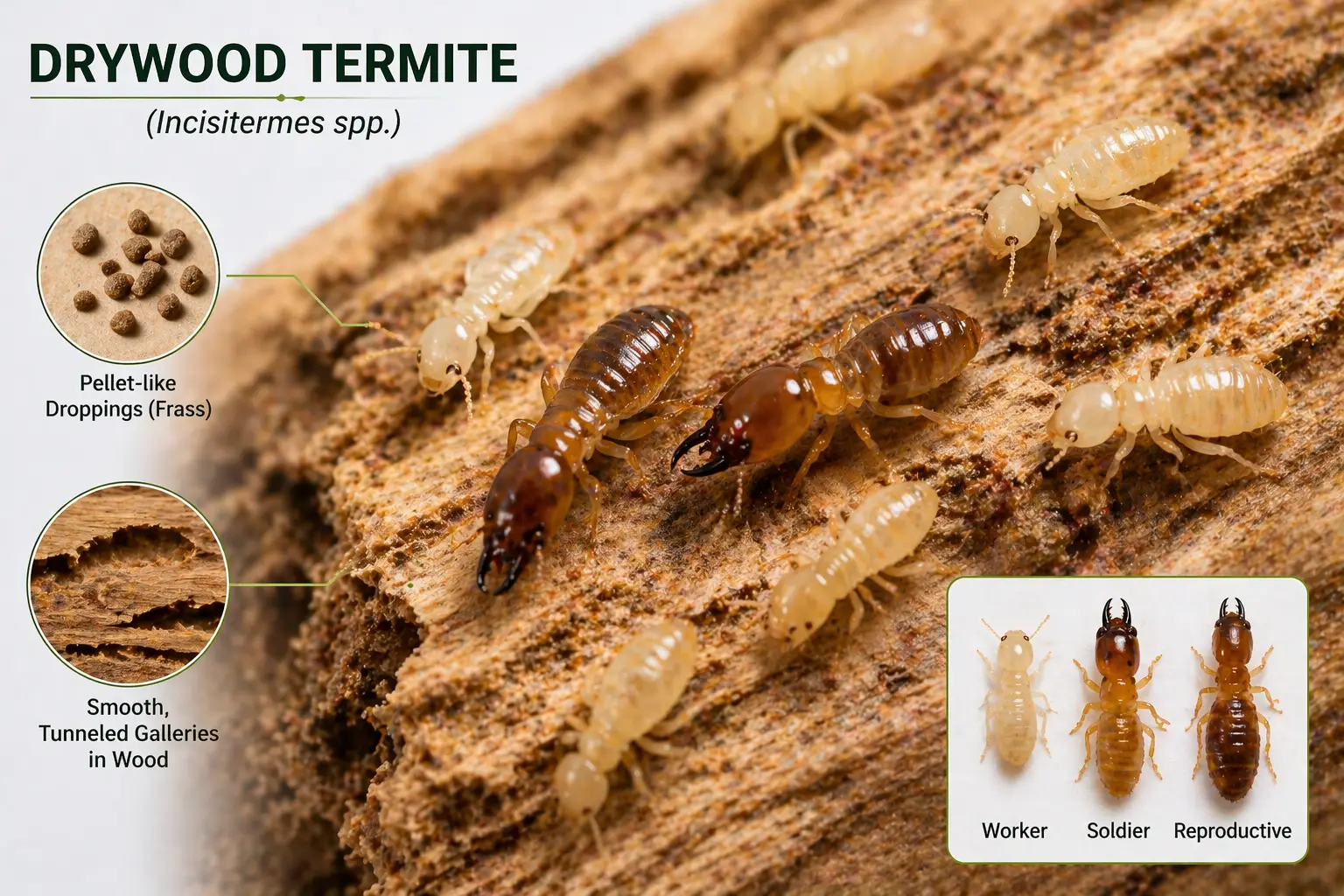
These are the most common culprits we find in La Palma's mid-century homes. They do not require contact with the soil to survive, preferring to fly directly into exposed eaves, attic vents, and aging wooden patio covers during their late summer and fall swarms.
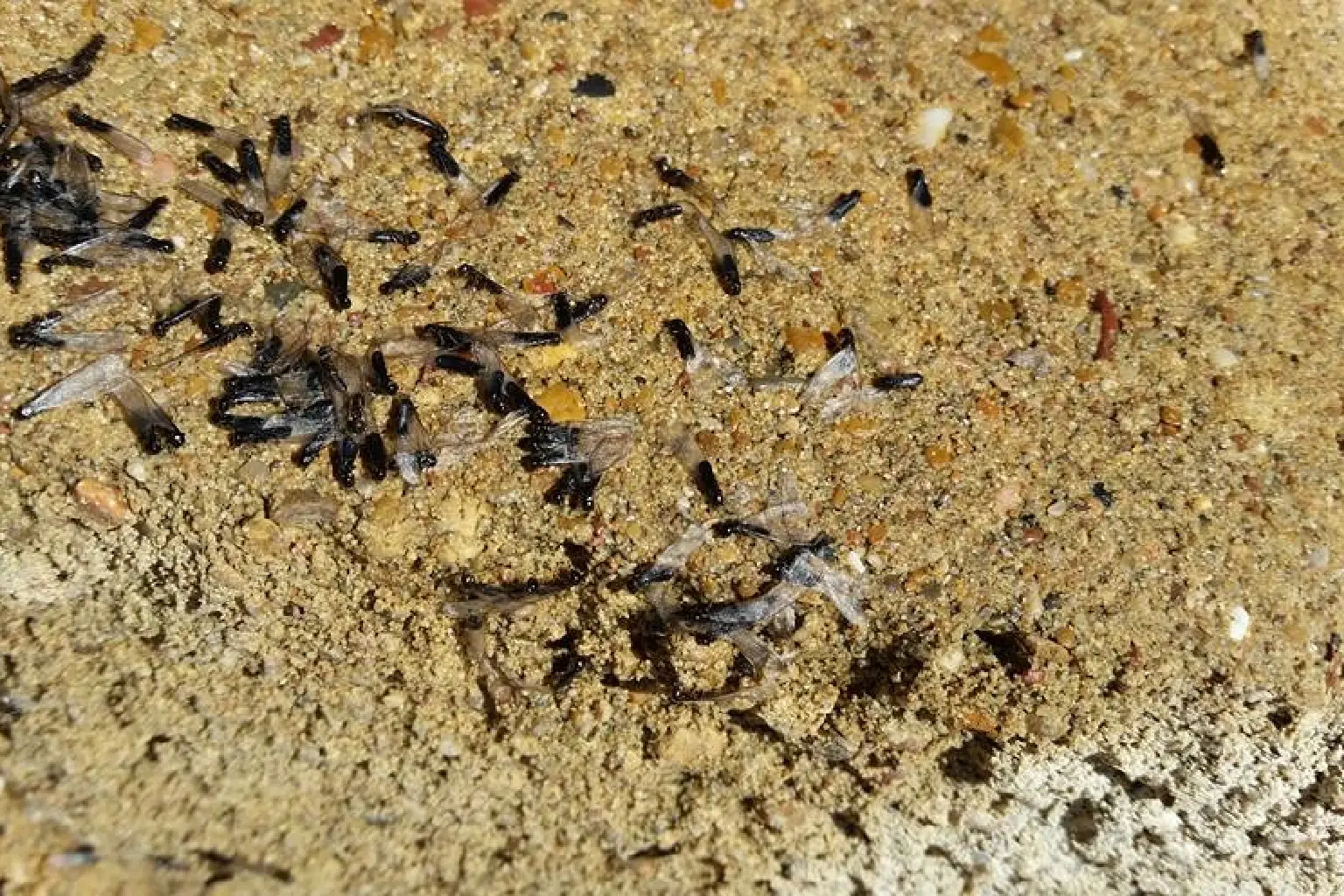
Thriving in the damp, heavily irrigated soils of La Palma's lush front yards, these termites build distinctive mud tubes up the sides of concrete slab foundations. They use these tubes to bridge the gap between the soil and the structural wood inside your walls, often causing massive damage before they are ever detected.

The constant search for water during hot Orange County summers—and shelter during winter rains—drives massive, multi-queen ant colonies out of the landscaping and directly into La Palma kitchens and bathrooms.
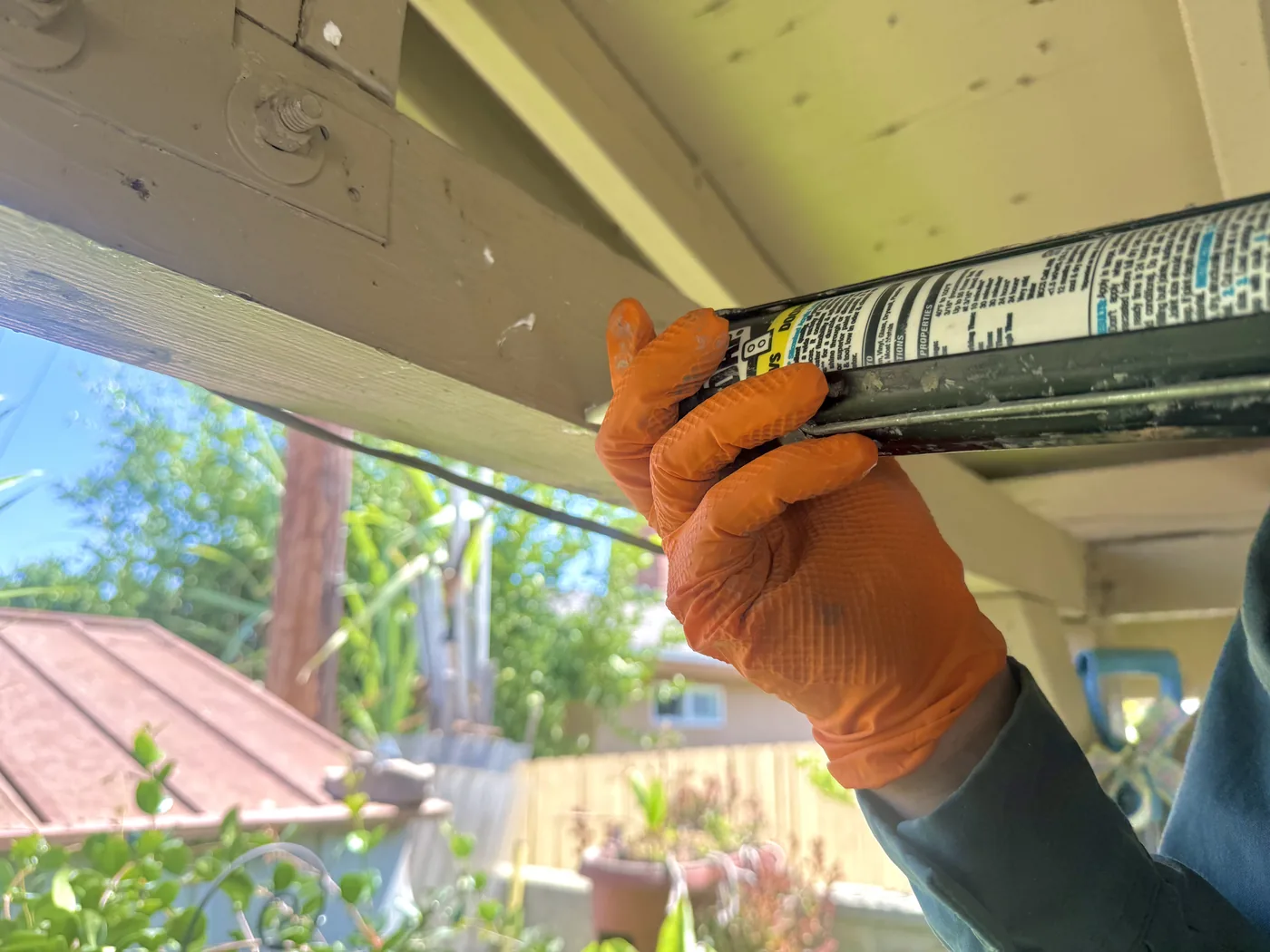
The dense property-line hedges and mature shade trees common in the area provide excellent breeding grounds for outdoor pests that eventually make their way indoors through aging weather stripping and utility penetrations.
Neighborhoods & Areas We Serve In La Palma
- North La Palma / Orangethorpe Corridor: Mid-century homes with mature landscaping that frequently experience heavy ant and subterranean termite activity.
- Central Park Area: Properties surrounding the park and Walker Street that are highly susceptible to drywood termite swarmers nesting in aging wood features.
- Coyote Creek Border: Homes situated near the western edge of the city where natural moisture run-off creates prime environments for ground-nesting pests and subterranean termites.
- La Palma Civic Center / Moody Street: The central residential blocks featuring older slab foundations and decorative wood fascias that require targeted, preventative care.
- South La Palma / Houston Avenue: Neighborhoods bordering Cypress where heavy summer irrigation brings persistent household pests indoors.

The Treebark Final Treatment: Complete Elimination & Lasting Protection

What to Expect After Your Treebark Treatment:
- Zero Evacuation or Wait Time: Because our product is completely family and pet-conscious, you, your children, and your pets can safely resume normal activities inside the home and yard immediately.
- Odorless & Invisible Application: We leave behind no messy residues, structural damage, or harsh chemical smells.
- Decade-Long Defense: Your property remains actively shielded against future drywood termite swarms, subterranean soil breaches, and seasonal household pest invasions.
- Ongoing Local Support: As a locally owned Southern California company, we stand by our final treatments. If pest pressures ever test the barrier, our La Palma team is just a phone call away to ensure your home remains safe and termite-free.
Why La Palma Properties Need Regular Inspections: Environmental Factors
La Palma enjoys a beautiful, temperate climate, with average annual highs peaking around 85°F in late summer and mild lows rarely dipping below 49°F in the winter. Unfortunately, this means La Palma never experiences the deep, sustained freezes that naturally kill off pest populations in other parts of the country. For termites, ants, and spiders, our year-round moderate climate means a year-round breeding season.
While subterranean termites feed constantly underground, La Palma's drywood termites are triggered by late summer and early fall heat waves. When temperatures spike in September and October, drywood colonies release thousands of winged swarmers. These swarmers are caught in local wind currents, often blowing directly from mature shade trees into the exposed eaves and attic vents of nearby homes.
La Palma receives a modest average of about 14.4 inches of rain annually, mostly concentrated between December and February. Because natural rainfall is low, residents rely heavily on artificial irrigation to keep lawns and gardens green. This constant, daily watering creates artificial moisture zones around the base of your home. Subterranean termites—which require moisture to survive—flock to these damp, irrigated borders, waiting for a chance to exploit a foundation crack.
As a planned community heavily developed in the 1960s and 70s, La Palma is dominated by concrete slab-on-grade foundations. Over the course of 50+ years, even the best-poured concrete develops microscopic settling cracks. Because subterranean termites can squeeze through a gap as thin as a piece of paper, these aging slab foundations act as a direct highway from the damp soil straight into your home's wooden wall studs.
Meet Your Local Treebark Team Serving La Palma


Frequently Asked Questions
Are termites common in La Palma?
Do older La Palma homes require annual inspections?
What neighborhoods in La Palma see the most pest activity?
Is tenting always necessary for drywood termites?
How quickly can I schedule an inspection in La Palma?
What La Palma-Area Homeowners Say
Real Google reviews from our Buena Park Google profile.
“We do an annual treatments with Treebark. I have never been dissatisfied with their professionalism, knowledge, price and customer service.”
Kevin O. · via Google (Buena Park profile)
“Termite Control companies are usually all about the same. These guys are no different. I found them to be pleasant and easy to work with.”
Sandra C. · via Google (Buena Park profile)
“Treebark has been helping us with the pest control needs for the past 03 years. They are courteous and professional. The service is always better than I could have hoped for. We hired them for invading mice and spider in our basement, and they were just fantastic. Thank you so much.”
Yvonne S. · via Google (Buena Park profile)
“Treebark has always provided us with the greatest service! Very dependable, timely, comprehensive, and quick. The owner is quite kind and easy to work with. Treebark is highly recommended by us.”
Logsdon G. · via Google (Buena Park profile)
Services in La Palma
- Termite Inspection
- Termite Control
- No-Tent Termite Treatment
- Drywood Termite Control
- Pest Control
- Rodent Control & Exclusion
Nearby Cities We Serve
- Pest Control in Buena Park
- Pest Control in Cerritos
- Pest Control in Cypress
- Pest Control in Hawaiian Gardens
- Pest Control in Artesia
- Pest Control in Los Alamitos
- Pest Control in Stanton
Calls answered 24/7: (888) 559-8816