
Los Angeles County – Treebark Termite & Pest Control
4.8 Rating on Google
- Stops termites damaging property within hours
- Kills 100% of directly or indirectly exposed termites within 14 days
- Provides colony control through superior transfer
- Protects properties for years
- Is exempt from poison scheduling reducing worker risk and disruption to homeowners
- Has very low toxicity to mammals, birds, earthworms and even bees.
Book a Pest
Control Treatment

Same-day Available

Family & Pet-Safe

Licensed Technicians
Treebark Termite & Pest Control
While you are enjoying the warmth of the Santa Ana winds, tiny silent invaders could be compromising your property’s foundation. In Los Angeles County, it isn’t a matter of whether your home will face wood-destroying insects, but rather when they will arrive. Unlike pests in colder climates that hibernate through the freezing months, local termite colonies remain fiercely active year-round due to our temperate coastal weather. According to housing industry data, more than 500,000 homeowners across the region face these structural risks annually, making a comprehensive termite inspection provided by Los Angeles County experts an absolute necessity rather than a mere recommendation. Partnering with a licensed pest control service helps ensure issues are addressed early and effectively.
Purchasing property in Southern California is likely the biggest financial commitment of your life, which means safeguarding that equity is your top priority. A professional evaluation serves as the primary investment protection framework standing between your dream home and a devastatingly high-priced repair bill. Unchecked colonies quietly consume the value behind your walls long before you ever notice a discarded wing on a windowsill. Recognizing this threat early allows you to maintain your home’s long-term structural integrity and confidently preserve its resale value.
Think of an expert evaluation as a thorough “home physical” for the bones of your house. Just as a doctor checks your vital signs to catch illnesses before they become severe, an inspector examines your attics, crawlspaces, and exterior perimeters to identify invisible vulnerabilities. Pest control professionals are heavily trained to spot the subtle, visual signs of entry that an untrained eye will naturally miss. This diagnostic process ultimately separates unfounded anxiety from actionable facts, giving you a clear picture of what is actually happening behind your stucco and drywall.
Southern California architecture presents unique challenges that invite different types of infestations, from a wooden deck in Silver Lake to a detached garage in the San Fernando Valley. Ground-dwelling species often build mud tubes up from the soil to reach your framing, while air-borne varieties fly directly into your attic vents. Finding evidence of either type during the escrow process can completely derail a real estate transaction if not handled properly. Understanding exactly what an inspector is looking for will help you navigate these high-stakes moments with absolute clarity.
Discovering evidence of wood-destroying organisms does not automatically mean your house needs to be sealed under a giant colorful tent. Depending on the specific findings, treatment options vary significantly, ranging from localized spot treatments to comprehensive whole-home defense strategies. Modern approaches, like those utilizing the compounds found in a Treebark Termite application, can target specific problem areas without requiring you to pack up your family and move into a hotel. Reputable termite treatment companies can explain when a small, localized solution is appropriate and when broader action is needed. Knowing the distinct difference between a minor localized fix and a major structural intervention keeps you in full control of your maintenance budget.
Navigating the complexities of property ownership shouldn’t feel like an impossible burden. This guide serves as a practical roadmap to understanding your home’s unique vulnerabilities, reading an official inspection report, and successfully passing escrow without unnecessary stress. By demystifying the behaviors of these year-round invaders and explaining the exact remedies available, you will gain the peace of mind needed to protect your greatest asset. Armed with the right functional knowledge, you can confidently stop these hidden threats long before they impact your family’s future.
Why Los Angeles County Homes are Prime Targets for Termite Colonies Year-Round
Southern California’s famous weather comes with a hidden downside. While much of the country gets a break from pests during freezing winter months, our mild Mediterranean climate means homeowners must watch for termites year round. There is no winter hibernation here; these silent invaders continually chew through the structural bones of your property regardless of the season. Effective termite control demands consistent, proactive attention.
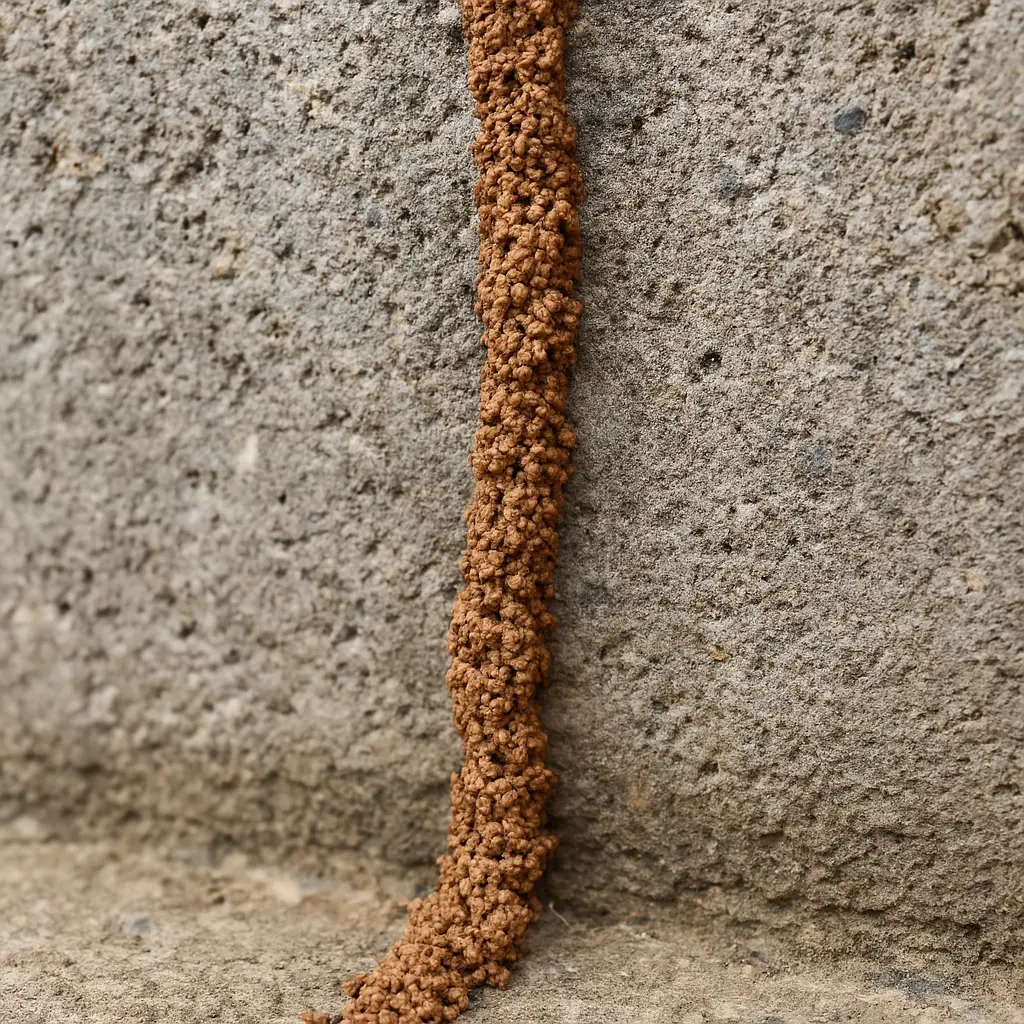
To make matters more complicated, popular local architecture often masks the early warning signs of an issue. Take the classic California stucco home, for example. While the smooth exterior looks beautiful, stucco that extends all the way down to the soil provides perfect cover for insects. Professional Los Angeles exterminators frequently discover “mud tubes”—tiny, pencil-sized tunnels made of dirt that termites build to travel safely—hidden entirely behind this outer layer. This structural blind spot allows colonies to feed unnoticed until significant damage is already done.
Even the local breeze plays a role in increasing your property’s risk. When the warm, dry Santa Ana winds kick up, they carry winged termites across neighborhoods, easily dropping them onto exposed roof eaves and wooden decks. Because effective termite control requires completely different remedies depending on how these pests enter your home, identifying the specific invader—whether it arrives from the sky or crawls up from the dirt—is essential for proper eradication.
The 'Air vs. Ground' Battle: Distinguishing Between Drywood and Subterranean Termites in SoCal
In Los Angeles County, the fight against wood-destroying pests usually breaks down into an “air versus ground” battle. In other words, it’s often a matter of drywood vs subterranean termites. Invading from above, the drywood termite relies on local winds to land directly on your roof eaves, attic vents, or exposed decks. Because they live entirely inside the wood they consume, you will rarely see the actual insects. Instead, homeowners typically discover frass—tiny, hard pellets that look suspiciously like small piles of sawdust or spilled coffee grounds collected on a windowsill.
Meanwhile, a completely different threat attacks from the earth below. Subterranean colonies desperately need constant moisture from the soil to survive, so they cannot simply live in your dry walls. To safely cross from the dirt to your home’s wooden framing, they build mud tubes. Finding these pencil-thick dirt tunnels climbing up your stucco or concrete base is one of the classic subterranean termite signs Southern California inspectors warn about, as these covered highways allow insects to bypass foundations unnoticed.
Understanding exactly which enemy is attacking your property comes down to three quick identification traits:
- Entry Point: Air (attics and rooflines) versus Ground (soil and foundations).
- Visible Waste: Dropped frass pellets versus built mud tubes.
- Colony Size: Smaller, isolated drywood groups versus massive, aggressive underground networks.
Spotting these physical clues yourself is helpful, but completely protecting your property requires an expert’s trained eye to conduct a thorough structural evaluation.
What Really Happens During a Termite Inspection: A Step-by-Step Walkthrough for Homeowners
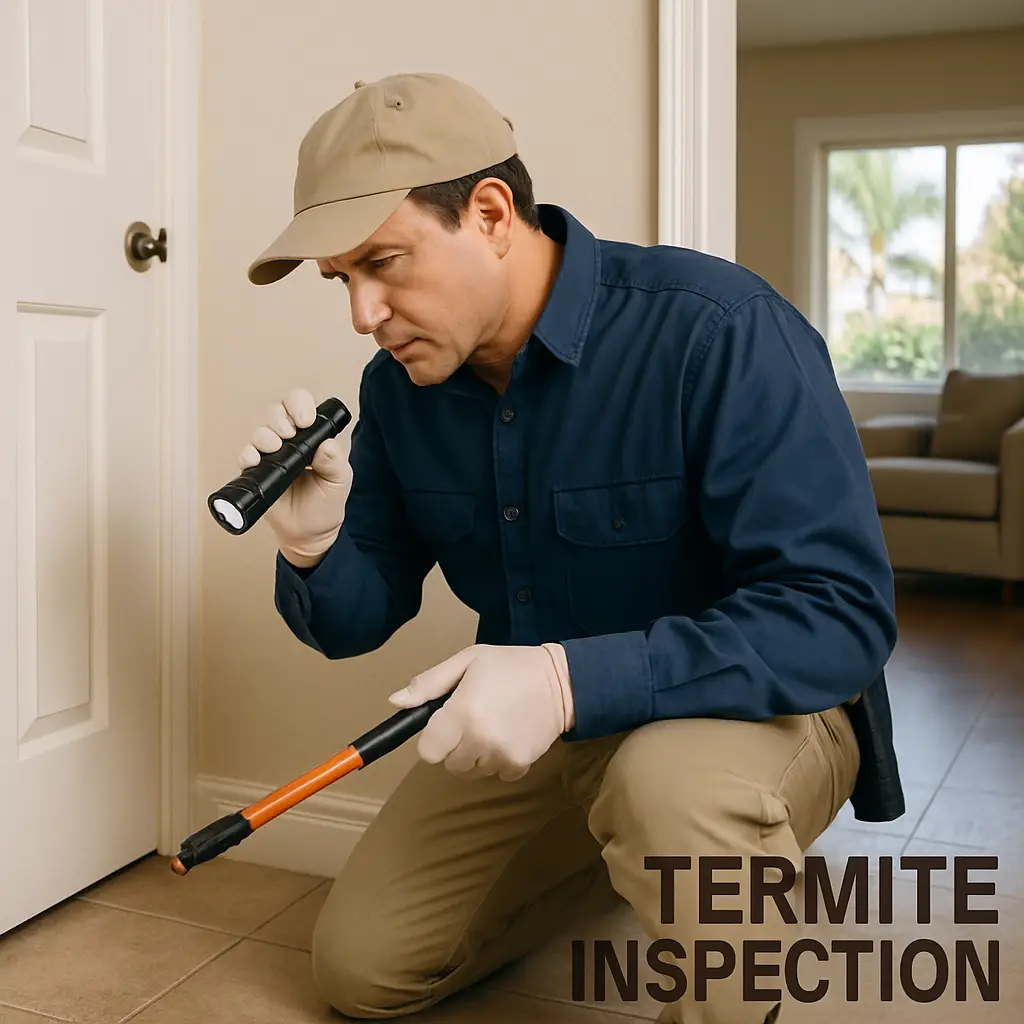
Scheduling a termite inspection in Los Angeles County usually means setting aside about 60 to 90 minutes for a comprehensive property exam. Think of this process as a physical for your home’s structural bones, requiring full access to its most hidden spaces. Before the expert arrives, you can streamline the visit by clearing pathways to your attic hatch, moving stored boxes away from garage walls, and ensuring the exterior perimeter of your stucco or wood siding is visible. Because these undisturbed areas are prime real estate for wood-destroying pests, blocking access means the inspector cannot give your property a complete bill of health.
Once inside those dark spaces, you might wonder what to expect during termite inspection procedures as you hear rhythmic thumping echoing through your walls. This tapping technique, known as sounding wood, helps the professional find hollow pockets inside timber that looks perfectly fine on the outside. When a wooden beam sounds hollow, they follow up with probing, gently pressing a specialized tool into the wood to check for structural weakness or hidden feeding galleries. The goal is to uncover the invisible damage lurking behind the paint long before a support beam actually fails.
Beyond simply hunting for live insects, a thorough pest inspection also involves looking for the environmental conditions that invite future trouble. Moisture leaks near your roofline or damp soil pooling against your foundation are major red flags, as this constant water supply practically guarantees an underground invasion. Identifying these risk factors alongside active damage forms the basis of the official document you receive at the end of the visit, directly impacting your repair timelines.
Deciphering Your Wood Destroying Organism Report: Section 1 Findings vs. Section 2 Maintenance
Receiving your official paperwork after the physical exam can feel overwhelming, especially if you need a wood destroying organism report for escrow to finalize a home purchase. This California standard form is not a simple receipt; it is a detailed map of your home’s structural health. Instead of reading like a dense scientific journal, the document categorizes findings into two distinct buckets to help you prioritize repairs and negotiate costs effectively.
The most critical area of this document is the structural pest control report section 1, which acts as the immediate fire alarm for your property. These findings represent active threats, meaning the professional found live insects, dry rot, or damage actively compromising your home’s framing. Because these issues threaten immediate safety and value, lenders almost always require Section 1 items to be fully repaired and cleared before they will fund a bank loan.
While active threats demand fast action, Section 2 findings serve as a warning about the future by identifying fire hazards rather than actual fires. These highlight “conditions conducive” to future trouble, like poor drainage or a garden bed where damp soil touches your exterior wood siding. Fixing this earth-to-wood contact might not be legally required to pass escrow, but ignoring it practically guarantees a costly invasion later. Once you know exactly what threats exist and what repairs are mandated, your next crucial decision involves comparing available treatment options to find the most effective solution.
Comparing Treatment Options: The Truth About Orange Oil and Structural Fumigation
Once your inspector hands over their findings, the most pressing question becomes how to eliminate the active threat without heavily disrupting your life. If the drywood termite activity is isolated to a single visible area—like one exposed rafter in your Silver Lake garage—localized treatments are highly appealing. These “spot treatments” involve drilling into the infested wood and injecting specialized solutions directly into the galleries where the pests live. Many eco-friendly treatment options for termites, including plant-derived orange oil or natural treebark termite treatments, have grown popular because they allow you to remain inside your home while the technicians work.
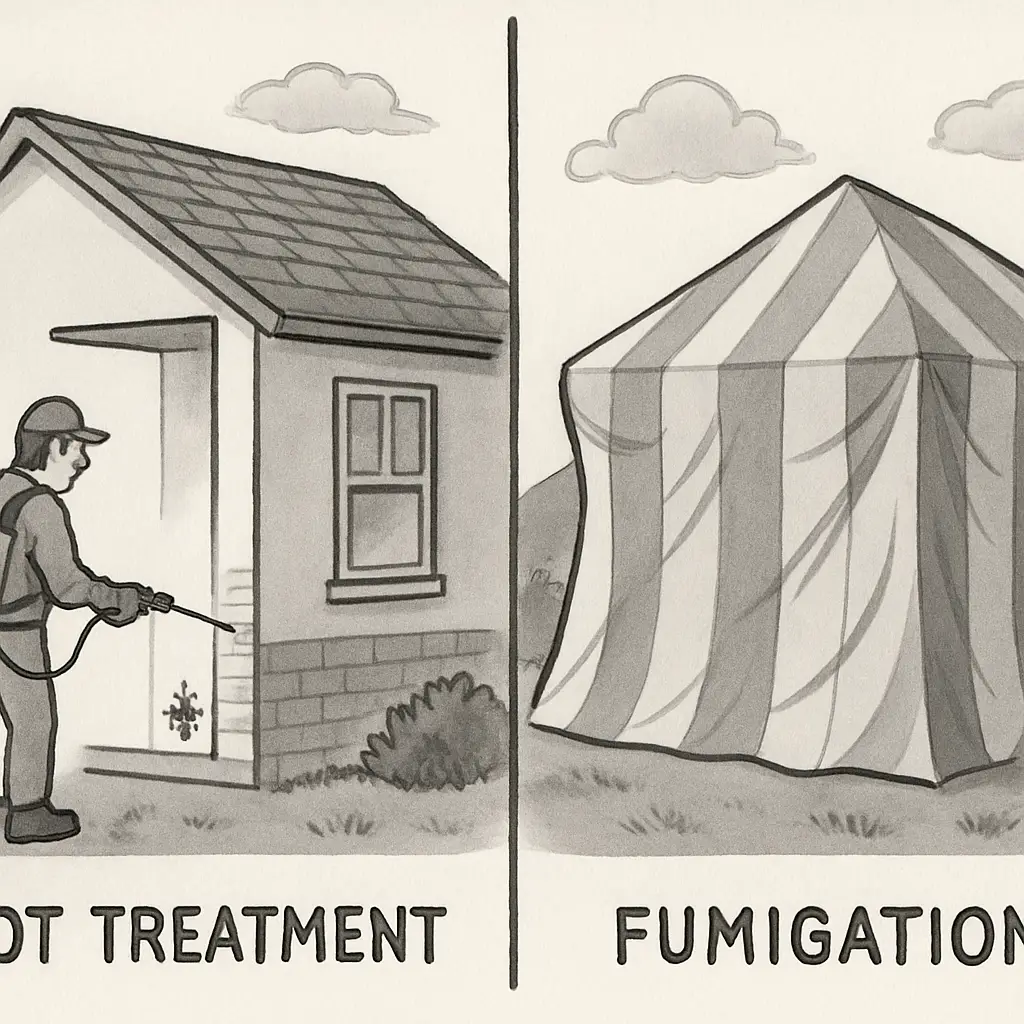
However, when an infestation spreads beyond a few accessible boards, the conversation must shift toward a more comprehensive solution. When weighing orange oil vs structural fumigation (often discussed as orange oil vs fumigation), homeowners are essentially comparing convenience against certainty. Structural termite fumigation involves wrapping your entire property in heavy canvas tenting and releasing a specialized gas that penetrates every hidden wall cavity and deep attic space. While this process requires you to pack up your family, groceries, and pets to move out for three days, it is the only 100-percent guaranteed method for eradicating widespread drywood colonies that localized sprays simply cannot reach.
Making the right choice ultimately depends on whether your structural pest control report classified your drywood invaders as a localized nuisance or a generalized structural threat. Once the airborne threat in your framing is successfully neutralized, attention must turn toward the soil to stop subterranean invaders.
Shielding Your Foundation: How Liquid Soil Barriers and Bait Stations Stop Subterranean Invaders
While drywood termites attack from the air, subterranean termites launch silent invasions from the soil beneath your foundation. Because these pests travel through dirt to reach your California bungalow, effective subterranean termite treatment must happen in the earth, not the wood. The traditional defense involves creating a liquid soil barrier. Professionals dig a shallow trench along your foundation’s perimeter, flooding it with a specialized treatment. This forms an invisible, continuous shield that intercepts worker termites attempting to build mud tubes up your exterior walls.
If trenching around your pristine Santa Monica landscaping sounds too invasive, baiting systems offer a highly effective alternative. Instead of saturating the soil, technicians strategically install discrete plastic bait stations into the ground around your property line. These cylinders hold a cellulose material that workers find irresistible. Once discovered, termites carry the slow-acting bait back to their underground nest to share. This approach leverages their natural foraging biology against them, eventually eliminating the queen and collapsing the entire colony without heavy perimeter saturations.
Comparing liquid soil barriers vs bait stations ultimately depends on your property’s layout and your tolerance for exterior modifications. Both approaches provide exceptional long-term termite control, keeping your home secure from the ground up. However, establishing a solid perimeter is only part of the equation if these silent invaders have already breached your physical defenses and caused structural damage.
The Hidden Cost of Delay: How Termite Damage Repairs Impact Your Wallet in Los Angeles
Ignoring a minor pest problem today practically guarantees a massive construction bill tomorrow. In the world of home maintenance, a harsh multiplier effect exists where every hundred dollars spent on prevention saves a thousand dollars in future structural corrections. Before an infestation turns into a catastrophe, you might notice subtle warning signs of structural weakness, such as a spongy feeling under your feet or sagging floor joists—the thick horizontal wooden beams supporting your home’s floors.
Once these silent invaders hollow out the structural framework of your property, simply eliminating the colony is no longer enough. You must now correct the actual termite damage, where replacing chewed-through roof fascia boards, attic rafters, or foundational sill plates demands highly skilled carpentry. When calculating termite damage repair costs, Los Angeles homeowners quickly realize that specialized labor adds up fast, as contractors must carefully extract and replace load-bearing wood without compromising the surrounding structure of your California bungalow.
To make matters worse, assuming your standard homeowners policy will bail you out is a costly mistake. Insurance providers uniformly classify insect destruction as a preventable maintenance issue, meaning they explicitly exclude it from coverage and leave you paying entirely out of pocket for any termite repair. Protecting your property’s long-term resale value requires staying ahead of these devastating costs before they threaten a future home sale or complicate the escrow process.
Navigating the Escrow Process: Getting Your Termite Clearance in Los Angeles County
Navigating a real estate transaction in Southern California is stressful enough without surprises holding up your closing. When entering escrow, lenders and buyers typically request a specific document: the wood destroying organism report for escrow. While the seller generally covers the cost of this initial pest inspection, who pays for the actual treatment is highly negotiable. Understanding these results is critical, as they directly impact your property’s closing timeline and final sale price.
Completing a standard termite inspection Los Angeles County buyers request is merely the first step. Many residents confuse the resulting report with a clearance certificate, but they serve entirely different purposes. The report acts as your home’s physical, detailing active infestations (Section 1 findings) alongside potential future hazards (Section 2 findings). A true clearance is only issued after those immediate Section 1 threats have been eliminated, proving to the lender that the property’s framework is sound.
To finalize the sale securely, this remedied work must be formally registered. The state requires companies to file a “Notice of Work Completed” with the California Structural Pest Control Board, generating the official documentation needed to satisfy escrow requirements. Licensed termite companies handle this filing as part of their standard process, ensuring the paperwork is accurate and complete. Catching these problems before your home hits the market saves significant negotiation headaches down the road. Spotting these silent invaders long before placing a “For Sale” sign in your yard requires knowing exactly where to look.
Identifying Termite Signs: A Homeowner’s DIY Checklist for Early Detection
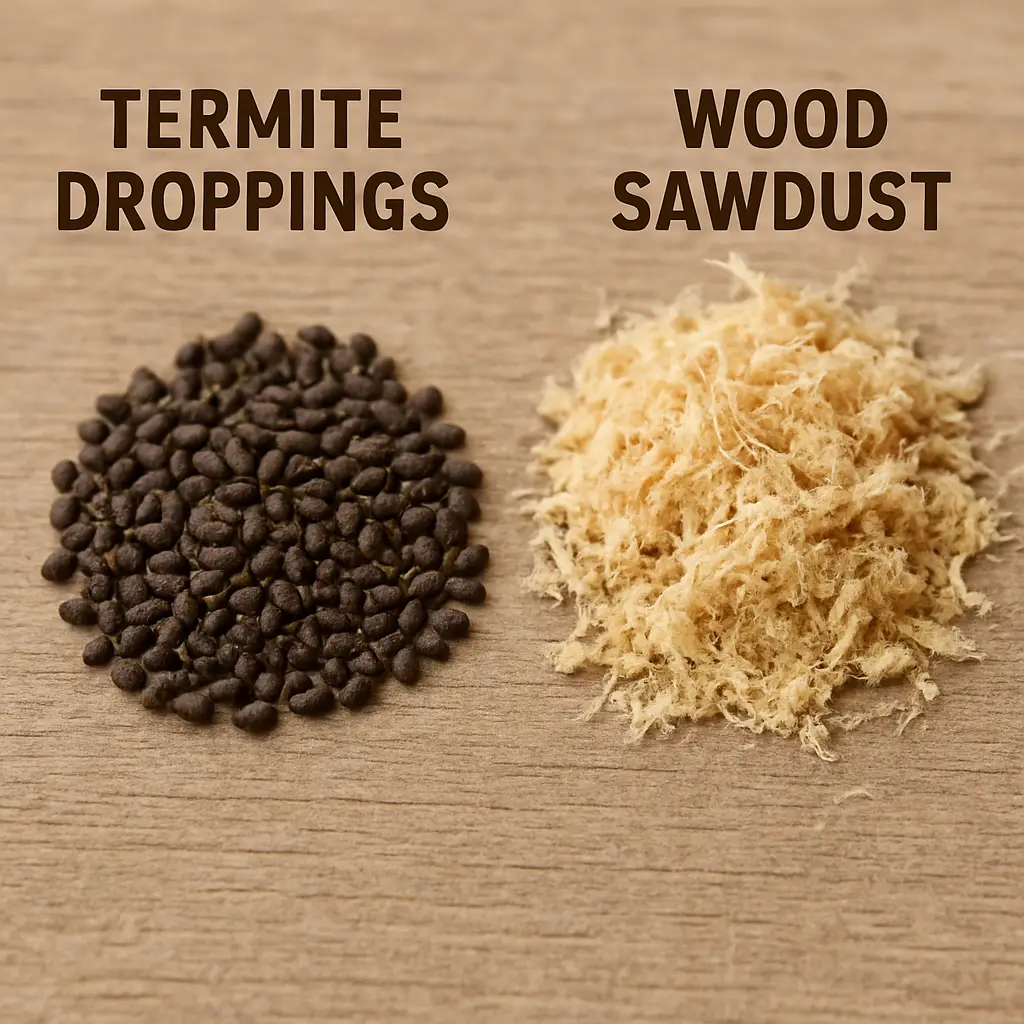
Protecting your Los Angeles home between professional visits requires knowing what to look for. Many homeowners panic over common dust, but identifying termite droppings versus sawdust is a crucial first skill. When sweeping debris near baseboards, look closely. Regular sawdust is soft and fibrous. Termite droppings—officially called “frass”—are entirely different. These are tiny, hard, six-sided pellets resembling miniature wooden footballs or coarse sand.
A reliable DIY termite inspection checklist for homeowners (a simple termite inspection checklist) helps you methodically evaluate vulnerable spots, from garage rafters to exterior stucco. Watch for these “Big 5” warning signs:
- Discarded Wings: Found near windowsills after a swarm.
- Pellets (Frass): The six-sided droppings mentioned above.
- Mud Tubes: Pencil-sized dirt tunnels climbing your foundation.
- Bubbling Paint: Often mistaken for water damage, this is one of the classic subterranean termite signs Southern California residents miss, masking tunnels beneath the surface.
- Hollow Sound: Wood that sounds empty when tapped.
Pay special attention to your walls and wooden window frames for “kick-out holes.” These are tiny, pin-sized openings where drywood termites actively push those six-sided pellets out of their tunnels. If you find these pinpoint holes or any items on the checklist, it is time to call professionals before the damage spreads across your property.
Treebark Termite Service Areas: Comprehensive Coverage Across the San Fernando Valley
Living in the San Fernando Valley means dealing with extreme summer heat, which heavily influences where pests hide. Whether you own a classic bungalow in Burbank, a newer build in Glendale, or property in Van Nuys and Northridge, securing reliable treebark pest control is critical to protecting your investment. Among the cities in Los Angeles County we service, these neighborhoods are primary areas we serve because our local inspectors deeply understand how this intense climate drives destructive insect behavior.
When temperatures routinely soar, subterranean termites instinctively change their survival strategy. Instead of foraging near the baking surface, they dig deeper underground to find cooler, damp earth, making their entry points difficult to spot with an untrained eye. Because these colonies retreat further below your foundation, a professional treebark termite inspection is often the only reliable way to detect the hidden mud tubes they construct deep within dark crawlspaces.
Simultaneously, drywood termites take advantage of the climate by invading the attics of older SFV bungalows. Since these pests thrive in the wooden framing right above your ceiling, inspectors prioritize evaluating these vulnerable upper spaces for hidden structural damage. While Valley residents battle dry heat and deep soil invaders, homeowners near the ocean face entirely different environmental threats driven by coastal moisture.
Coastal Protection: Managing Termite Moisture Risks in Santa Monica and the South Bay
Living near the water in Santa Monica, Manhattan Beach, or Long Beach presents a unique set of structural challenges. The constant ocean humidity and dense morning fog create a “coastal moisture factor,” providing a continuous water supply for pests. Because the air is thick with dampness, subterranean termites—which normally must stay close to the ground—can survive and build their mud tubes much higher inside your walls. To combat this hidden threat, our pest control services Los Angeles County team focuses heavily on exterior moisture management.
This salty marine layer also actively degrades exposed exterior wood, making it soft and highly attractive to insects. Dampwood termites, a species drawn directly to water-damaged timber, thrive in the South Bay where sea breezes constantly batter wooden decks and siding. Securing effective termite treatment in Los Angeles County in these coastal zones requires catching this salt-accelerated wood rot before moisture-loving pests can establish a massive colony.
Homeowners must regularly check window frames and exterior trim for soft spots caused by this relentless ocean dampness. Protecting homes from the beach to the inland valleys is why these coastal communities remain vital service areas. Preserving specific architectural details, however, requires an entirely different strategy when protecting historic properties.
Historic Home Defense: Protecting Older Properties in Pasadena and the San Gabriel Valley
Owning a Craftsman bungalow in Pasadena or a historic Victorian in South Pasadena is a point of local pride, but these architectural treasures demand specialized care. Many of these century-old homes were built using “old-growth” lumber, featuring a dense center known as heartwood. While this vintage timber is renowned for its strength, decades of settling, microscopic cracking, and weathering create unique vulnerabilities that modern homes simply do not face.
Because these historical gems feature intricate woodwork and tightly enclosed crawlspaces, any routine termite inspection Los Angeles County residents book must take a highly customized approach. An experienced exterminator knows that drywood pests can quietly hollow out original exposed rafters or decorative corbels without leaving obvious surface damage for years. Identifying these hidden threats requires a trained eye to distinguish between normal antique wood aging and active structural damage.
Preserving the unique character of these properties means addressing infestations without tearing apart irreplaceable craftsmanship. Targeted, localized pest control treatments are frequently preferred to clear colonies while maintaining the home’s original architectural integrity. While safeguarding the antique lumber of the San Gabriel Valley demands this careful, preservation-first mindset, securing tomorrow’s homes requires an entirely different strategy focused on pre-treating soil in developing areas.
New Construction Precautions: Why Pre-Treating Soil is Essential in Developing Areas
Building a brand-new house in growing areas like Santa Clarita might seem like a guaranteed way to avoid structural issues, but fresh lumber quickly attracts local pests. When developers move massive amounts of earth, they deeply disturb existing underground termite colonies. Because these insects live in the dirt, preventing them from breaching your home starts before the foundation is even poured. This is why a proper pre-construction termite soil treatment is essential to protect the property from the ground up.
Reaching the dirt beneath a cured concrete slab to stop an active invasion is a costly headache. Applying a liquid soil barrier before the foundation goes down blocks pests from finding microscopic cracks in the concrete later. While buyers often assume a freshly built home is naturally immune to damage, proactive pest services during the foundation stage remain the only true defense against these hidden ground threats.
Homeowners buying into new developments should carefully check their paperwork for the standard five-year warranty window. Builders typically guarantee their initial termite control measures for this specific timeframe, but once it expires, the ongoing protection of your investment falls entirely on you. Even with solid ground protection, airborne invaders can still attack your roof and eaves, especially during swarming season.
Understanding Termite Swarm Season: What to Do When the ‘Flying Ants’ Appear
Just after the first autumn rains hit Los Angeles, residents often notice sudden clouds of winged insects hovering near their windows or outdoor lights. This triggers the notorious termite swarm season Southern California experiences, when mature colonies send out reproductive adults—called alates—to establish new nests. Seeing these pests outside is expected in our climate, but discovering dozens of shed wings on your indoor windowsills is a massive red flag. An indoor swarm strongly suggests a fully developed colony already lives deep inside your walls.
Panic often sets in when these winged bugs appear, but you must first learn to distinguish flying ants vs termites before assuming the worst. To tell the difference, look closely at the insect’s body shape. Termites possess a thick, straight waist and straight antennae. Conversely, ants have a pinched, narrow waist and sharply bent antennae. Furthermore, a termite’s wings are perfectly equal in length. Grabbing a quick smartphone photo of the specimen will help your inspector accurately identify the specific structural threat.
Ignoring an indoor swarm inevitably leads to expensive wood replacement. If you spot these straight-waisted pests inside your house, immediately schedule a comprehensive termite inspection from licensed professionals to uncover their hidden nesting areas. Before allowing anyone to drill into your stucco, however, you must ensure they have the proper credentials.
Verifying Your Pest Control Professional: Using the California Structural Pest Control Board
Finding the right expert requires more than just searching for the best pest control reviews online. Before anyone inspects your framing, you must confirm their credentials through the California Structural Pest Control Board. This state agency regulates the industry and protects homeowners from unqualified contractors. Keep in mind that any official, legal termite inspection report handed to you must clearly display an active state license number to be valid during a real estate transaction.
Understanding exactly who is standing on your porch is equally critical. The technician evaluating your property usually holds a “Field Representative” license, allowing them to legally identify wood-destroying pests under the supervision of a licensed “Operator” who manages the business. Furthermore, the individual who sprays your yard for spiders cannot legally inspect your attic for termites. Structural termite licenses demand entirely different training and testing than basic general pest credentials.
Completing a quick pest control license verification California residents trust takes only seconds on the state’s online portal. Entering the company’s name or inspector’s number instantly reveals their current standing and any history of violations. At this stage, it’s wise to compare licensed termite companies and reputable termite treatment companies so you can choose a qualified provider. Once you have confidently verified a reputable professional, the focus shifts to selecting safe, effective, and eco-friendly removal methods.
Eco-Friendly Pest Control: Safe and Effective Alternatives for Los Angeles Families
Protecting your Los Angeles home from wood-destroying pests shouldn’t require exposing your family to harsh industrial chemicals. Many homeowners assume eliminating an infestation means packing up the kids and the dog to escape toxic fumes. However, modern approaches like treebark pest control offer a significantly safer path. These eco-friendly solutions utilize botanical derivatives that specifically target insect biology. Because the active ingredients disrupt enzymes found only in pests, they provide exceptional defense while remaining entirely safe for households with mammals.
Rather than wrapping your entire house in a massive fumigation tent, these low-impact methods focus exactly where the problem lives. Using treebark termite treatments as a localized solution, technicians apply the plant-based formula directly into the attic beams or wall voids where Drywood termites hide. This targeted approach wipes out the colony without displacing your family for days, proving you do not need synthetic toxins to maintain your property’s long-term structural integrity.
Securing the best pest control means finding this perfect balance between family safety and uncompromising strength. While botanical treatments easily penetrate wooden structures to stop active colonies, some homeowners mistakenly believe their home’s construction naturally prevents infestations entirely.
Common Termite Myths Debunked: Why Concrete Slabs and Brick Aren’t Enough
Many homeowners believe a sturdy stucco or brick exterior acts as an impenetrable fortress against pests. Unfortunately, these durable outer layers are simply the cosmetic skin covering a highly vulnerable wooden skeleton. While a thick brick facade might weather the elements beautifully, it cannot deter insects seeking out the soft framing hidden inside your walls. Genuine termite control requires protecting these internal structures rather than relying solely on your home’s exterior shell.
The foundation under your feet offers another false sense of security. As houses settle over time, microscopic stress fractures naturally develop in the concrete. Subterranean termites easily exploit these slab entry points, squeezing upward from the soil through cracks as thin as a single business card. Once through the concrete, they travel directly into your baseboards and framing, causing severe termite damage long before any visible warning signs appear in your living room.
Modern building materials also fall short of providing absolute protection. While treated lumber shields its outer surface, any cuts, nail holes, or natural splitting expose the soft, untreated center known as the heartwood. Colonies will happily bypass the treated exterior to feast on this unprotected core. Because these hidden vulnerabilities exist in every property, securing the best termite treatment requires regular professional monitoring.
Scheduling Your Inspection: How Often Should You Call the Pros?
Living in Southern California means enjoying beautiful weather year-round, but our local wood-destroying insects love the climate just as much. Because we lack a deep winter freeze to halt pest activity, booking a regular termite inspection Los Angeles County residents trust is essential. In fact, many homeowners search for a termite inspection Los Angeles provider to ensure quick scheduling and local expertise. While you can schedule an evaluation anytime, Spring and Fall are ideal. During these transitional months, colonies often push out visible droppings near windowsills, making early warning signs much easier for a professional to spot.
Determining your exact maintenance schedule depends heavily on your property’s history and risk factors. To keep your home’s wooden framing secure, follow this simple termite inspection frequency guide:
- High-risk areas (Annual): Older homes, houses with wood siding, or properties with heavy vegetation need yearly check-ups.
- Low-risk/Recently treated (Every 2 years): If your home recently underwent treatment, bi-annual checks maintain your defensive perimeter.
- Escrow (Immediate): Securing a clear report is an immediate requirement to protect any real estate transaction.
Sticking to this routine unlocks access to ongoing protection plans offered by local pest services. These plans act like a home warranty, locking in regular monitoring and future repair guarantees. Instead of nervously anticipating the cost of termite tenting when a major structural problem hits, these schedules catch small issues early. A proactive action plan is the best defense for a termite-free home.
Your Action Plan for a Termite-Free Home in Los Angeles County
You no longer have to view every unexplained pile of dust near your baseboards with quiet panic. By understanding the distinct behaviors of local wood-destroying pests, you have shifted from reacting to a hidden threat to proactively defending your most valuable asset.
The key to beating California’s relentless insects is putting this knowledge into immediate motion. Start by scheduling a professional termite inspection in Los Angeles County to establish a clear baseline for your property. An expert eye will correctly identify whether you are dealing with soil-based moisture seekers or attic-dwelling swarmers.
Once the exact pest is pinpointed, you can confidently move forward with targeted treatments rather than guessing with ineffective temporary sprays. Following the treatment phase, immediately addressing any necessary structural repairs ensures your home’s framing remains completely sound.
To complete your defense, implement a consistent maintenance routine to keep these silent chewers from ever returning. By fixing leaky outdoor pipes, clearing exterior mulch, and keeping soil away from your foundation, you naturally eliminate the conditions that invite future colonies.
This straightforward progression cuts through the overwhelming information overload so often associated with escrow timelines and complex real estate transactions. Securing a clean Section 1 clearance certificate goes far beyond satisfying a lender; it delivers the ultimate peace of mind that your family’s roof is thoroughly secure.
Protect your Southern California home by partnering with experienced pest control experts. Reach out to Treebark Termite for a specialized local assessment from a trusted pest control service, and maintain the lasting confidence that comes with a structurally sound, resilient property.
Frequently Asked Questions
To help property owners in Dana Point better understand their pest control needs, we have compiled answers to the most common questions our technicians receive in the field.
Why are Los Angeles County homes at risk for termites all year?
Southern California’s mild, Mediterranean climate means there’s no deep winter freeze to slow termite activity, so colonies stay active 12 months a year. Local architecture can hide early warning signs—stucco that runs to the soil conceals subterranean mud tubes—and seasonal Santa Ana winds help winged drywood termites land on roof eaves and attic vents. Together, these factors make proactive, ongoing inspections and prevention essential.
How can I quickly tell if I’m dealing with drywood termites or subterranean termites—and why does it matter?
Look for three clues that guide treatment choices:
- Entry point: Drywood invade from the air (eaves/attics); subterranean come from the ground (soil/foundations).
- Visible evidence: Drywood leave frass (hard, pellet-like droppings) and “kick-out holes”; subterranean build pencil-thick mud tubes up walls or foundations.
- Colony pattern: Drywood infestations are smaller and localized; subterranean colonies are large, underground networks.
- Identifying the type matters because remedies differ—drywood may need localized spot treatments or whole-structure fumigation, while subterranean infestations are stopped with soil-based barriers or bait systems.
What actually happens during a termite inspection, and how do Section 1 vs. Section 2 findings affect escrow?
Plan for 60–90 minutes and clear access to attics, crawlspaces, garage perimeters, and the home’s exterior. Inspectors “sound” wood to find hollows, probe suspicious areas, and note risk conditions like leaks or damp soil against foundations. Your Wood Destroying Organism (WDO) report separates:
- Section 1 (immediate threats): Active termites, dry rot, or damage that typically must be repaired and cleared before lenders fund a loan.
- Section 2 (conducive conditions): Issues like poor drainage or earth-to-wood contact that signal future risk but aren’t always required for escrow.
- After Section 1 work is completed, the company files a Notice of Work Completed with the California Structural Pest Control Board—this generates the clearance your escrow needs.
Which treatment should I choose—spot/“orange oil”/Treebark-type treatments or full fumigation? And what stops subterranean termites?
- Drywood termites: If activity is isolated and accessible (e.g., one exposed rafter), localized spot treatments—including botanical options like Treebark or orange oil—can be effective without moving out. If the infestation is widespread or hidden across multiple areas, whole-structure fumigation (tenting) is the only method that guarantees complete eradication.
- Subterranean termites: Treatments target the soil, not the wood. Liquid soil barriers create a continuous treated zone around the foundation; bait stations discreetly attract foragers and eliminate the colony from within. The best choice depends on property layout, landscaping, and how intrusive you want installation to be.
What early signs should I watch for, and what should I do during swarm season?
Use a simple DIY checklist between professional visits:
- Discarded wings on windowsills (after swarms)
- Frass pellets (hard, six-sided, like coarse sand) vs. soft, fibrous sawdust
- Mud tubes climbing foundations
- Bubbling or blistering paint that can mask tunnels
- Hollow-sounding wood when tapped
- In swarm season (often after early autumn rains), distinguish termites from flying ants: termites have straight waists, straight antennae, and equal-length wings. Finding wings or frass indoors suggests an established colony—photograph what you see and schedule a licensed inspection immediately to pinpoint hidden nesting areas.