
Orange oil and Altriset are both localized, no-tent treatments. A licensed technician finds the termite galleries, drills small holes and injects product directly into the infested wood. The differences come down to what’s on each product’s EPA label: what it’s registered for, how it’s applied, and what the label requires of the person applying it. Treebark uses Altriset and never uses orange oil. Here’s an honest comparison.

 4.9 starsLicense PR9342
| Altriset | XT-2000 Orange Oil Plus | |
|---|---|---|
| EPA Reg. No. | 100-1503 | 71986-2 |
| Active ingredient | Chlorantraniliprole 18.4% (anthranilic diamide, IRAC Group 28) | d-Limonene 95% |
| Signal word | None. The EPA-accepted label states "No SIGNAL WORD is required for this product." | CAUTION |
| Label hazard statement (humans & pets) | "When used as directed this product does not present a hazard to humans or domestic animals." | "Harmful if absorbed through the skin… May cause eye or skin irritation… Harmful if inhaled. Avoid breathing vapor." |
| Applicator PPE | Mixers/loaders: shirt, long pants, shoes plus socks. Once diluted, "shirt, pants, socks and shoes are sufficient." | Long-sleeved coveralls, chemical-resistant footwear, chemical-resistant gloves and protective eyewear |
| Fire note | None on label | "Do not use or store near heat or open flame." |
| Termites on label | Subterranean, drywood (localized: Incisitermes, Cryptotermes, Marginitermes), arboreal | Drywood termites (plus wood-boring beetles, carpenter ants) |
| Drywood application | Drill to intersect galleries; inject up to 50 mL per hole; liquid or dry foam into voids/galleries; plug holes | Drill 7/64" holes into kick-outs in a "w" pattern 3–5" apart; inject up to 1 minute; 0.22 gal per cubic foot; plug holes |
| Foam for wall voids | Yes, label foaming instructions (dry foam, 25:1, for wall voids) | Not on label |
| Retreatment | "Reapply if drywood termite activity within treatment areas is detected," using new holes between the old ones | "Do not apply again to the same area within one year." |
| Environmental notes | Toxic to aquatic invertebrates, oysters and shrimp; groundwater advisory | Don't apply to water; label states "This product is biodegradable." |
Both labels limit use to licensed applicators (Altriset) or require full handler PPE (XT-2000). UC IPM notes that drywood products aren’t available to homeowners.
UC IPM (UC Statewide IPM Program, Pest Notes: Drywood Termites) says localized treatments vary “considerably” in effectiveness by product, and that “if you correctly locate the colony and get the chemical or nonchemical treatment directly onto the termites, the effectiveness of control will be high.” On botanicals, UC IPM says orange oil and neem oil “have been tried, but recent lab and field tests from two universities question the efficacy of at least d-limonene.” UC IPM doesn’t rate Altriset by name. Syngenta, Altriset’s manufacturer, states that “when used in accordance with the label, Altriset controls termites in less than three months” (Syngenta Altriset product info). The biggest single factor for any spot treatment is detection accuracy.
XT-2000 Orange Oil Plus is EPA-registered for drywood termites when it’s injected directly into located galleries. UC IPM cites university tests that question d-limonene’s efficacy. As with any localized product, untreated or hidden galleries won’t be affected.
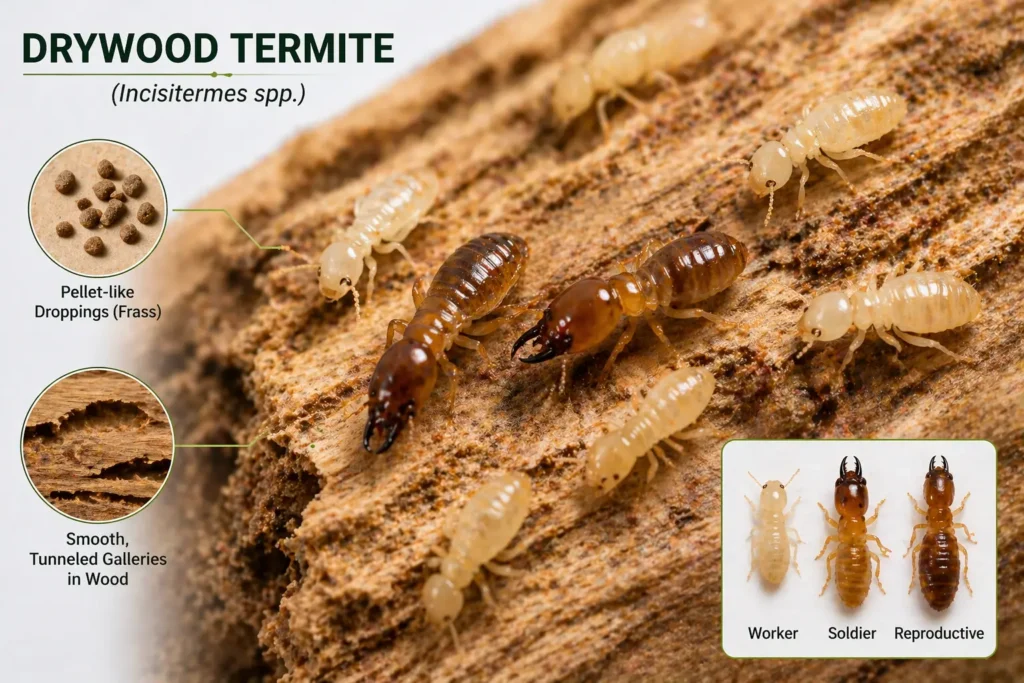

The State of California recognizes fumigation as the only method of control that takes one treatment. Any localized treatment, Altriset or orange oil, is legally considered a secondary method, and multiple treatments might be needed, since a colony may be missed during the initial treatment. By law we disclose this on every inspection report.
Localized pros: convenient, with no move-out and no tent; can be paired with an ongoing inspection program.
Localized cons: colonies may be missed and secondary treatments may be needed; small drill holes in wood members (patched and prepped for paint).
Fumigation: treats the whole structure at once, but requires vacating, leaves no residual, and can damage roofs and plants.
We don’t publish flat prices, because every home is different. Cost depends on:
how many infestations are found and where they are
access (attic, substructure, wall voids that need foam)
the amount of wood to treat preventatively
whether repairs are needed
Localized treatment and fumigation are often comparable in cost. You’ll get a written estimate after a free inspection.
We treat every infestation located at inspection, typically with Altriset.
We treat unfinished wood framing (substructure, attic, garage) preventatively.
When an infestation leads into a wall void, ceiling or enclosed area, we foam-treat it with a termiticide labeled for that use.
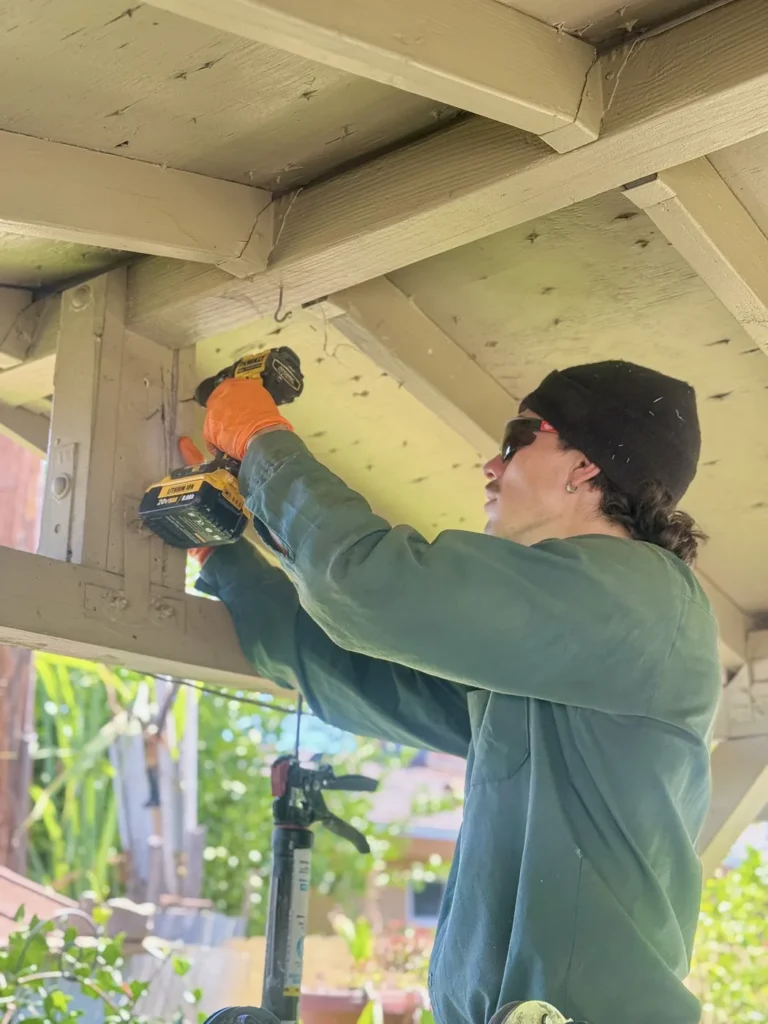
We drill-and-inject around the infestation to encircle the colony, not indiscriminately. Holes are patched and prepped for paint.
Treebark doesn’t tent homes itself. When a job needs tenting, we arrange fumigation through a licensed partner, so you still deal with one company.
Per Syngenta, when used according to the label, Altriset controls termites in less than three months (source). Some homes need a follow-up treatment.
1-year transferable guarantee: if any colony remains, we return at no additional charge.
They’re different tools. From the EPA labels, Altriset carries no signal word and is labeled for subterranean and drywood termites, including foam for wall voids. XT-2000 Orange Oil Plus carries a CAUTION signal word and is labeled for drywood termites. UC IPM notes university tests question d-limonene’s efficacy. For any localized product, finding the colony matters most.
It’s EPA-registered for drywood termites when injected directly into located galleries. UC IPM reports university tests that question the efficacy of d-limonene.
Yes, with localized treatment. California recognizes fumigation as the only method of control that takes one treatment, so localized treatment may need multiple treatments if a colony is missed.
Chlorantraniliprole, 18.4% (EPA Reg. No. 100-1503).
It depends on the number and location of infestations, access, preventative wood treatment and repairs. Get a written estimate after a free inspection: (888) 559-8816.
Yes. Treebark’s localized treatment includes a 1-year transferable guarantee. If any colony remains, we return at no additional charge.
Syngenta Altriset product information: https://www.syngentapmp.com/product/altriset-insecticide
Altriset label, EPA Reg. 100-1503 (EPA-accepted 01/07/2015): https://www3.epa.gov/pesticides/chem_search/ppls/000100-01503-20150107.pdf
Altriset marketed label (Syngenta): https://assets.syngentapmp.com/pdf/labels/SCP1503AL1A0115-2.pdf
XT-2000 Orange Oil Plus label, EPA Reg. 71986-2: https://www3.epa.gov/pesticides/chem_search/ppls/071986-00002-20150219.pdf (rev. 8-11-22: https://labelsds.com/images/user_uploads/XT2000%20Label%208-11-22.pdf)
UC IPM Pest Notes: Drywood Termites: https://ipm.ucanr.edu/PMG/PESTNOTES/pn7440.html

